
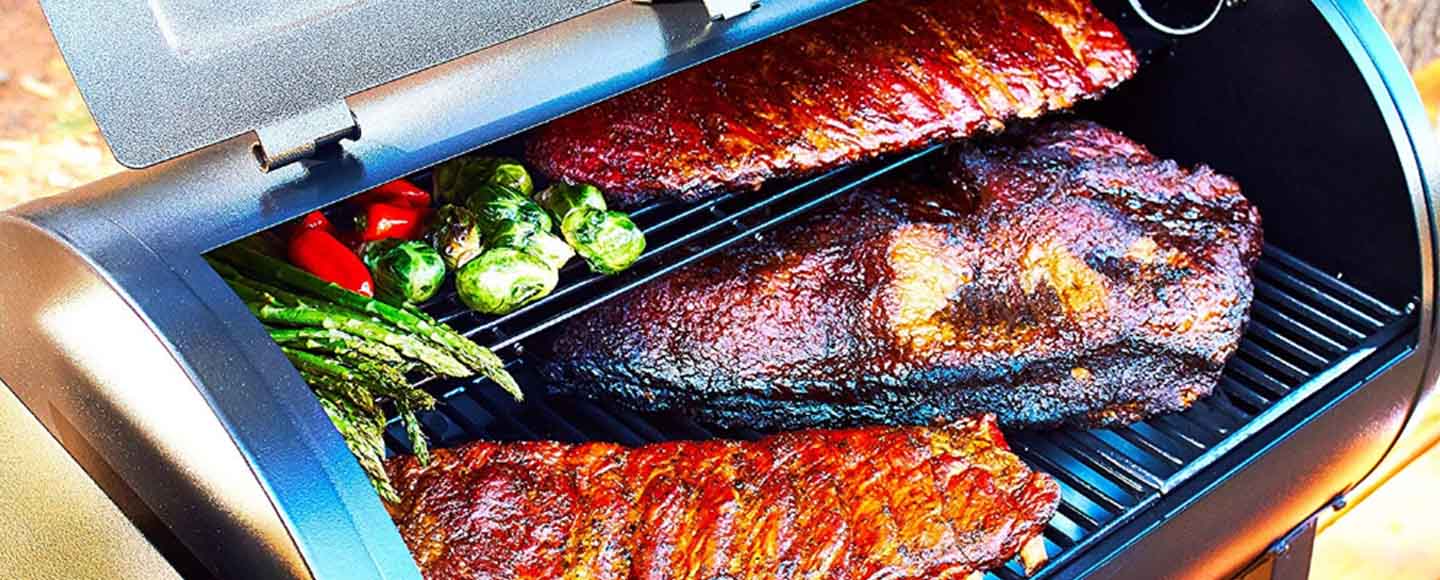
The Best Pit Boss Pellet Grills for the Money
I’ve burned through a lot of pellets testing Pit Boss grills over the years — some of that was on purpose, some of it was me forgetting to check the hopper mid-cook (don’t do that, by the way, more on it later). Out of every “budget-friendly” pellet brand I’ve cooked on, Pit Boss is the one I keep coming back to when someone asks me, “Andy, what should I actually buy?”
Here’s the thing about Pit Boss: it’s not the flashiest name in the game, and it’s definitely not going to win any beauty contests against a Traeger sitting on a magazine cover. But pound for pound, dollar for dollar, it puts more cooking space and more real features in your hands than almost anything else on the market. That’s not marketing talk — that’s what I’ve found after setting up, seasoning, and cooking hundreds of pounds of brisket, ribs, and pork butt on these things.
This guide is for the person standing in their backyard (or scrolling on their phone in a store parking lot) trying to figure out which Pit Boss model actually makes sense for how they cook. Maybe you’re smoking your first brisket next weekend. Maybe you’re feeding a crowd every Sunday. Maybe you just want something that fits in the truck bed for a camping trip. I’ve got a model for all of that, and I’ll tell you exactly why.
Before we get into reviews, I want to save you a headache. Pit Boss has a habit of selling what’s essentially the same grill under three or four different names depending on which store you’re standing in. I’ll explain that below so you’re not left confused when the model at Lowe’s doesn’t match the one your buddy bought at Walmart.
Every model below earns its spot because of real performance differences — cooking space, temperature control, build quality — not because it’s the most expensive. I’ll tell you who each one is actually built for, and I’ll be straight with you about where each one falls short too. That’s the whole point of a guide like this.
The Pit Boss Retail Maze (Read This First)
If you’ve been shopping around and noticed that Pit Boss grills have confusingly similar names — Lexington, Onyx, Sportsman, Pro Series, Copperhead — you’re not losing your mind. Pit Boss builds retail-exclusive versions of a lot of their core grills. The same basic chassis might show up at Lowe’s under one name, at Walmart under another, and at Academy Sports under a third, each with slightly different shelving, colors, or controller upgrades.
Why does this matter to you? Two reasons.
First, it means you can’t always do a straight apples-to-apples price comparison between what you see online and what’s sitting in the store. Second, and more importantly, it means when I recommend a specific model below, I’m also telling you roughly where to find it, because chasing down the exact SKU matters more with this brand than most.
I’ll flag the retail exclusivity on each pick so you know what you’re actually walking into.
Quick Picks: Best Pit Boss Pellet Grills at a Glance
If you’re short on time, here’s the cheat sheet. I go deeper on every one of these below, including who I think should (and shouldn’t) buy each one.
| Model | Best For | Cooking Space | Standout Feature |
|---|---|---|---|
| Pit Boss 850 DX | Best Overall | ~850 sq. in. | Slide-plate direct flame searing |
| Pit Boss Sportsman 850 | Best Value for the Money | ~850 sq. in. | Loaded shelving + PID controller for the price |
| Pit Boss Pro Series 1300 | Best WiFi Model | ~1,300 sq. in. | 4.3″ touchscreen, WiFi/Bluetooth, 35 lb hopper |
| Pit Boss Lexington 500 | Best Budget Option | ~500 sq. in. | Full digital control under $400 |
| Pit Boss Titan 1600 | Best Large Capacity | ~1,600 sq. in. | Roll-top lid, commercial-grade steel |
| Pit Boss Tabletop | Best Portable | 256 sq. in. | Locking lid, travel-ready build |
| Pit Boss 5-Series Vertical | Best Vertical Smoker | 5 full racks | Slow pellet burn, huge vertical capacity |
Keep this table in your back pocket. Now let’s talk about why each of these earned its spot — and who I think should actually spend their money on it.
Deep-Dive Reviews: The Best Pit Boss Pellet Grills
Pit Boss 850 DX
Retail note: this one’s a Lowe’s exclusive.
If a friend pulled me aside at a cookout and said “just tell me which one to buy,” this is where I’d point first. The 850 DX hits a sweet spot I don’t see a lot of grills hit cleanly — it’s got real cooking capacity, a controller that actually holds temperature, and it doesn’t take up half your patio to do it.
Cooking Performance
I’ve run low-and-slow smokes on this thing for 10+ hours (think pork shoulder territory) and it holds its set temp within a tight enough range that I stopped babysitting it after the first couple of cooks. That matters more than people realize — a grill that swings 20-30 degrees around your target temp will dry out a brisket before you know what happened.
Build Quality
The steel gauge feels a step above what you get on entry-level units. The hinges don’t feel like they’re going to loosen up after a season, and the paint held up fine through a full summer of cooks for me, no bubbling or flaking around the firebox.
Temperature Consistency
This is where the 850 DX really separates itself. The slide-plate direct flame broiler is the feature I use constantly — it lets you open a plate under the grates and get real, direct flame contact for searing. That’s something a lot of pellet grills simply can’t do, and it’s the difference between a decent steak and a steak with an actual crust on it.
- Excellent heat retention for long smokes
- Direct flame searing without needing a separate grill
- Comfortable cooking capacity for a family of 4-6
- Lowe’s exclusive, so availability can be regional
- Heavier than it looks — plan for two people to assemble it
Someone who wants one grill that genuinely does it all — low-and-slow smoking on Saturday, seared steaks on Tuesday — without needing to own two separate cookers.
Pit Boss Sportsman 850
Here’s a model that doesn’t always get the credit it deserves. The Sportsman 850 shows up with bundle deals that genuinely surprised me — built-in front and side shelves that would normally be an add-on purchase, paired with an upgraded PID controller that usually shows up on pricier units.
If you’re the type of shopper who cross-shops prices before buying anything (and honestly, you should be), this is the one where the math works out best. You’re getting a controller that actually modulates the auger and fan to hold temperature — not just a basic on/off dial — plus enough usable shelf space to actually prep and plate food beside the grill instead of running back and forth to the kitchen.
- Price relative to features is genuinely hard to beat right now
- The extra shelving is more useful day-to-day than people expect
- PID control means fewer temperature swings than basic controller models
- Hopper capacity is solid but not class-leading — plan pellet refills on long overnight cooks
- Some Sportsman-branded bundles vary by retailer, so double check what’s actually included before you buy
Buyers who want PID-level temperature control and legit workspace without paying flagship prices. This is the “I did my research and found the smart buy” pick.
Free Pellet Grill Cheat Sheet
Get my perfect temperature and timing guide for brisket, ribs, and pork butt directly to your inbox. Never overcook a smoke again!
Pit Boss Pro Series 1300 (4th Gen)
I’ll be honest with you — I was skeptical of Pit Boss’s app experience for years. It always felt like it was playing catch-up to the bigger names. The 4th Edition Pro Series 1300 is the first one that made me stop grumbling about it.
The 4.3-inch touchscreen controller is a real upgrade over the old dial-and-button setup. You get seamless WiFi and Bluetooth connectivity through the Pit Boss app, so you can check your grill temp and probe temps from your phone without walking outside every 20 minutes. If you’ve ever hosted a party and had to keep sneaking away from your guests to check on a brisket, you know exactly why this matters.
Remote Monitoring
You can watch both grill chamber temp and internal meat temp from your phone. For long cooks, that’s the difference between checking your phone during commercials and setting an alarm at 3 a.m. to go outside in the cold. Pair this with a dedicated meat thermometer, and you’re fully dialed in.
Meat Probe Integration
Comes with probes that sync directly to the app, so you get a notification when your target internal temp hits — genuinely useful for something like a turkey where you don’t want to guess.
Bottom-Drop Cleanout
The updated ash cleanout system on this generation is a real quality-of-life upgrade. No more scraping ash out with a shop vac after every big cook.
- Massive 35 lb hopper means fewer mid-cook refills
- App experience finally feels reliable, not just “there”
- Huge 1,300 sq. in. cooking surface for entertaining
- This is a bigger footprint grill — measure your patio space first
- Premium price tier within the Pit Boss lineup
Tech-comfortable cooks who want to monitor a cook from inside the house, and anyone who regularly cooks for a crowd and needs the extra hopper capacity to match.
Pit Boss Lexington 500 (Onyx Series)
Retail note: this is your Walmart staple.
Not everybody needs 1,300 square inches of cooking space and a touchscreen. If you’re just starting out, or you’re cooking for two to four people on a normal weekend, the Lexington 500 gives you real digital temperature control and heavy-duty porcelain-coated grates for well under $400.
I always tell beginners the same thing: don’t overspend on your first smoker before you know how much you actually love smoking food. The Lexington lets you learn the fundamentals — managing smoke, wrapping at the right time, understanding stall behavior on a brisket — without a huge financial commitment. If you fall in love with it (and most people do), you’ll know exactly what features you want to upgrade to next time.
- 500 sq. in. of cooking space — enough for a full rack of ribs plus sides
- Digital control, not a manual dial, so you’re not guessing at temperature
- Durable porcelain grates that clean up easily
- No WiFi or app connectivity
- Smaller hopper means more frequent pellet top-offs on long smokes
First-time smokers, small households, and weekend cooks who want reliable results without a big price tag.
Pit Boss Titan 1600
When people ask me about competition-style cooking or hosting big backyard gatherings, I point them straight at the Titan 1600. This is Pit Boss’s flagship statement piece, and it looks the part — heavy-gauge steel construction, a roll-top lid instead of a standard hinge, and 1,600 square inches of cooking real estate.
That’s enough room to run two full packer briskets and a couple of pork butts at the same time, which is exactly the kind of capacity you need if you’re feeding an extended family reunion or running a backyard competition-style cook.
Cooking Capacity
This is the whole reason to buy this grill. If you’ve ever had to cook briskets in shifts because your smoker and grill combo couldn’t fit everything at once, you know how much that slows down a big event.
Build Quality
The roll-top lid design isn’t just for looks — it makes loading and unloading large cuts easier than fighting with a standard clamshell lid on a grill this size.
- Genuinely competition-ready capacity
- Heavy steel build feels like it’s made to last
- Great for entertaining large groups
- Takes up significant patio or yard space
- Overkill if you’re typically cooking for under 6 people — you’ll be running it half-empty most of the time
Serious backyard hosts, extended families, and anyone flirting with competition-style BBQ who needs the space to match their ambition.
Pit Boss Tabletop (Onyx Series)
I get asked constantly about grills for camping, tailgating, and RV trips, and this is the one I recommend without hesitation. The Tabletop gives you 256 square inches of genuine wood-fired pellet cooking in a build that locks down and travels well.
Don’t confuse “portable” with “toy,” either. This still gives you real pellet smoke flavor — not the propane taste you get from most tailgate grills — just in a footprint that fits in an RV pass-through storage bay or the bed of a truck.
- Locking lid means it travels without spilling ash or pellets everywhere
- Compact enough for apartment balconies and small patios too, not just travel
- Still delivers that real pellet-smoked flavor in a small package
- 256 sq. in. is tight if you’re cooking for more than 2-3 people
- Hopper capacity is small, so it’s better suited to shorter cooks like burgers, chicken, and sausage rather than an all-day brisket
Tailgaters, campers, RV owners, and apartment dwellers who want real pellet-grill flavor without a full-size footprint.
Pit Boss 5-Series Vertical
Vertical smokers get overlooked by a lot of first-time buyers, and I think that’s a mistake if your priority is capacity without a giant horizontal footprint. The 5-Series stacks five full interior racks, so you’re getting serious vertical real estate in a build that takes up way less floor space than a horizontal unit with equivalent capacity.
The other thing I love about vertical smokers in general — and this one specifically — is pellet efficiency. Because heat and smoke naturally rise upward through the stacked racks, you’re not fighting physics the way you are in a horizontal chamber. That translates to slower pellet consumption and, in my experience, really consistent bark development across everything you’re cooking, top rack to bottom.
- Efficient pellet use over long smokes
- Small footprint for the amount of cooking space you get
- Great bark and smoke ring consistency top to bottom
- Not built for searing — you’ll want a separate grill or the direct-flame models above for that
- Loading/unloading racks takes a little getting used to compared to a flat cooking chamber
Smoke purists who prioritize capacity and efficiency over searing capability, and anyone tight on patio space who still wants serious cooking volume.
Pit Boss Pellet Grill Buying Guide: Features Worth Paying For
Now that you’ve seen the individual reviews, let’s talk about what actually separates a good Pit Boss purchase from a “why did I buy this” purchase. I get messages all the time from people who bought based on price alone and regretted it a month in. Here’s what I’d actually look at.
Size vs. footprint
Don’t just look at the total square inches listed on the box — check how that space is split between the main cooking rack and the warming rack up top. A lot of grills pad their advertised cooking space by including that upper warming rack, which isn’t ideal for direct heat cooking like ribs or a full brisket. When I’m evaluating a grill’s real capacity, I mentally subtract the warming rack and judge based on main-rack space alone.
The brains: standard digital vs. advanced PID/touchscreen controllers
This is probably the single biggest factor in how consistent your cooks turn out, and it’s the one beginners undervalue the most.
A basic digital controller is essentially on/off — it fires the auger in set intervals to try to hold temperature, which means you’ll see swings of 15-25 degrees around your target. That’s fine for a weekend burger cook. It’s less fine for a 12-hour brisket where consistency is everything.
A PID controller (like what you’ll find on the Sportsman 850 and the Pro Series 1300) actively modulates the auger feed and fan speed in real time to hold a much tighter temperature band. If you’re planning to do a lot of low-and-slow cooking — brisket, pork shoulder, ribs — I’d genuinely spend the extra money to get PID control. It’s the upgrade that pays you back every single cook.
The Pit Boss secret weapon: direct-flame searing
This is the feature that made me a genuine believer in this brand. Most pellet grills cook entirely through convection — hot air circulating around the meat — which is great for smoking but terrible for getting an actual sear on a steak. Pit Boss’s slide-plate flame broiler system (found on models like the 850 DX) lets you open a plate directly over the fire pot, exposing your food to real direct flame.
Practically speaking, this means you can smoke a batch of burgers low and slow, then slide the plate open and finish them over direct flame for a real char — all on the same grill, no separate charcoal grill required. If you only buy one pellet grill and want it to do double duty as your everyday grill too, prioritize a model with this feature.
Cleanup systems: ash cleanout cups vs. legacy scraped trays
This one sounds minor until you’ve done it wrong a few times. Older-style Pit Boss models require you to manually scrape ash out of the firepot with a shop vac or brush — messy, and easy to skip until it builds up enough to affect airflow (which then hurts your temperature control). Newer models, especially in the Pro Series lineup, use a bottom-drop ash cleanout cup that you can empty in seconds. If you cook often, this small feature saves you real time and keeps your fire pot burning cleaner, which directly improves temperature consistency over the life of the grill.
Hopper capacity
Bigger isn’t always better here, but it matters for long cooks. A small hopper (under 20 lbs) means you’ll be refilling pellets during an overnight brisket smoke, which nobody wants to wake up for. If you regularly do long low-and-slow cooks, look for something in the 30+ lb range like the Pro Series 1300’s 35 lb hopper.
WiFi vs. non-WiFi
I’ll be straight with you — WiFi connectivity is a convenience feature, not a performance feature. It won’t cook your food better. What it will do is let you monitor temps from inside the house instead of walking outside every 20 minutes, which matters a lot if you’re hosting or if you tend to do long overnight smokes. If that sounds like your cooking style, it’s worth the upgrade. If you’re mostly doing quick weekend cooks where you’re already outside anyway, don’t pay extra for it.
Pit Boss vs. the Competition
I get asked constantly how Pit Boss stacks up against the bigger names, so let’s run through it honestly.
The Searing Showdown
This is where Pit Boss usually wins outright. Thanks to the direct-flame broiler system, Pit Boss models can deliver a real sear that most competing pellet grills simply can’t match without an add-on searing station. Traeger and Camp Chef units generally rely on very high convection heat to approximate a sear, and in my experience, it doesn’t get you the same crust.
The App Experience
This is where Traeger still holds an edge. Their app has had more time to mature, and it shows in small polish details — smoother notifications, more recipe integration, a slightly more intuitive interface. The Pit Boss app (especially on the 4th Gen Pro Series) has closed a lot of that gap, but if app polish is your top priority, Traeger is still slightly ahead. Read our full Pit Boss vs Traeger comparison here.
Value and Build
Compared to Z Grills, Pit Boss generally offers better build quality and more premium features at a similar price point, though Z Grills can undercut on pure entry-level pricing. Compared to Weber’s pellet lineup (SmokeFire), Pit Boss tends to offer more cooking space per dollar, though Weber’s overall fit-and-finish is a step up if budget isn’t a major concern.
The Pellet Debate
When it comes to the fuel itself, many pitmasters wonder if brand-name pellets matter. While Pit Boss pellets do a great job for the price, you might want to see how they stack up against the competition in our Pit Boss vs Traeger pellets breakdown.
Bottom line: if your top priorities are value, cooking capacity, and searing capability, Pit Boss is hard to beat. If app polish and brand prestige matter more to you than raw features per dollar, you might lean toward Traeger instead.
Essential Accessories Worth Buying
I don’t believe in loading up your cart with gadgets you’ll never use, but there are a handful of accessories that genuinely improve your experience with any Pit Boss grill.
- A custom-fit heavy-duty cover. This is the one accessory I tell literally everyone to buy on day one. Pellet grills have electronic components — the auger motor, the controller — that do not enjoy sitting exposed to rain and sun. A proper cover is cheap insurance against a very expensive repair.
- Smoke tubes. If you ever feel like your cook could use a little more smoke flavor (common on shorter cooks where the fire hasn’t built up much smoke yet), a pellet smoke tube is an easy, inexpensive way to boost that clean wood flavor without changing anything about how your grill runs.
- Drip bucket liners. Small thing, huge time saver. Instead of scrubbing out a grease bucket after every cook, you just swap the liner. If you cook often, this alone will save you a genuinely annoying chore.
Frequently Asked Questions
Can a Pit Boss grill really sear a steak?
Yes — models with the slide-plate direct flame broiler (like the 850 DX) expose your food to real direct flame, not just convection heat. That gets you an actual sear, not just a warm steak with grill marks. Entry-level models without this feature will struggle to sear as well as a dedicated grill.
Why do some models look identical but have different names?
Pit Boss builds retail-exclusive versions of the same core grills for different stores — Lowe’s, Walmart, Academy Sports, and others. The chassis and cooking mechanics are often nearly identical, but the shelving, color, and sometimes the controller can differ slightly between versions. Always check the specific spec sheet for the model in front of you rather than assuming two similarly named grills are identical.
How long do Pit Boss grills last?
With regular maintenance — cleaning out ash buildup, using a cover, checking auger and fan function each season — most owners get 5-8 years of solid use out of a Pit Boss grill. The models with heavier-gauge steel (like the Titan 1600) tend to hold up longer than entry-level units.
What is the best Pit Boss pellet grill to buy?
For most people, the Pit Boss 850 DX hits the best overall balance of cooking capacity, temperature consistency, and direct-flame searing. If you’re on a tighter budget, the Lexington 500 gives you reliable digital control for well under $400.
Which Pit Boss pellet grill offers the best value?
The Sportsman 850 tends to offer the strongest features-to-price ratio right now, thanks to bundled shelving and a PID controller usually reserved for pricier models.
Are Pit Boss pellet grills worth the money?
In my experience, yes — especially compared to similarly priced competitors. You typically get more cooking space and more real features (like direct flame searing) per dollar than you would from the bigger-name brands at the same price point.
Which Pit Boss models have WiFi?
The Pro Series lineup, especially the 4th Generation Pro Series 1300, offers full WiFi and Bluetooth connectivity through the Pit Boss app. Entry-level models like the Lexington 500 stick to standard digital control without app connectivity.
What size Pit Boss pellet grill should I buy?
For two to four people, 500 sq. in. (like the Lexington 500) is plenty. For a typical family of four to six, look in the 850 sq. in. range. If you’re regularly hosting large groups or cooking multiple briskets at once, step up to the Titan 1600.
Are Pit Boss pellet grills good for beginners?
Absolutely. Digital temperature control takes a lot of the guesswork out of smoking compared to a traditional charcoal or offset smoker, which makes Pit Boss a genuinely forgiving place to start learning.
Final Verdict: Which Pit Boss Belongs in Your Yard?
If you’ve read this far, you’ve probably already got a sense of where you land. Here’s the quick version:
- Just want one grill that does everything well? Go with the Pit Boss 850 DX. It’s the one I recommend most often, and the direct-flame searing genuinely changes what you can cook on it.
- Watching your budget but want real features? The Sportsman 850 gives you PID control and bonus shelving without flagship pricing.
- Want to monitor cooks from your phone and feed a crowd? The Pro Series 1300 (4th Gen) is the tech-forward pick with real hopper capacity to match.
- New to smoking or cooking for a small household? Start with the Lexington 500. Learn the fundamentals before you upgrade.
- Hosting big groups or flirting with competition cooking? The Titan 1600 gives you the room to stop cooking in shifts.
- Need something that travels? The Tabletop Onyx packs real pellet flavor into a build that fits in a truck bed or RV bay.
- Prioritizing smoke efficiency and volume over searing? The 5-Series Vertical stacks serious capacity into a small footprint.
Whichever one you land on, my honest advice is the same advice I’d give a friend standing next to me at the grill: buy for how you actually cook, not for the model with the most features on paper. If you’re mostly doing weekend burgers and the occasional rack of ribs, don’t overspend on a 1,600 sq. in. flagship you’ll never fill. And if you’re feeding a crowd every weekend, don’t shortchange yourself with something too small just to save a few bucks.
Pick the one that matches your real cooking life, season it properly before your first big cook, and you’ll get years of good food out of it. That’s really all there is to it.
Ready to Fire Up Your New Pit Boss?
Stop second-guessing and start smoking. Grab our top-rated overall pick today and get ready for the best barbecue of your life.