
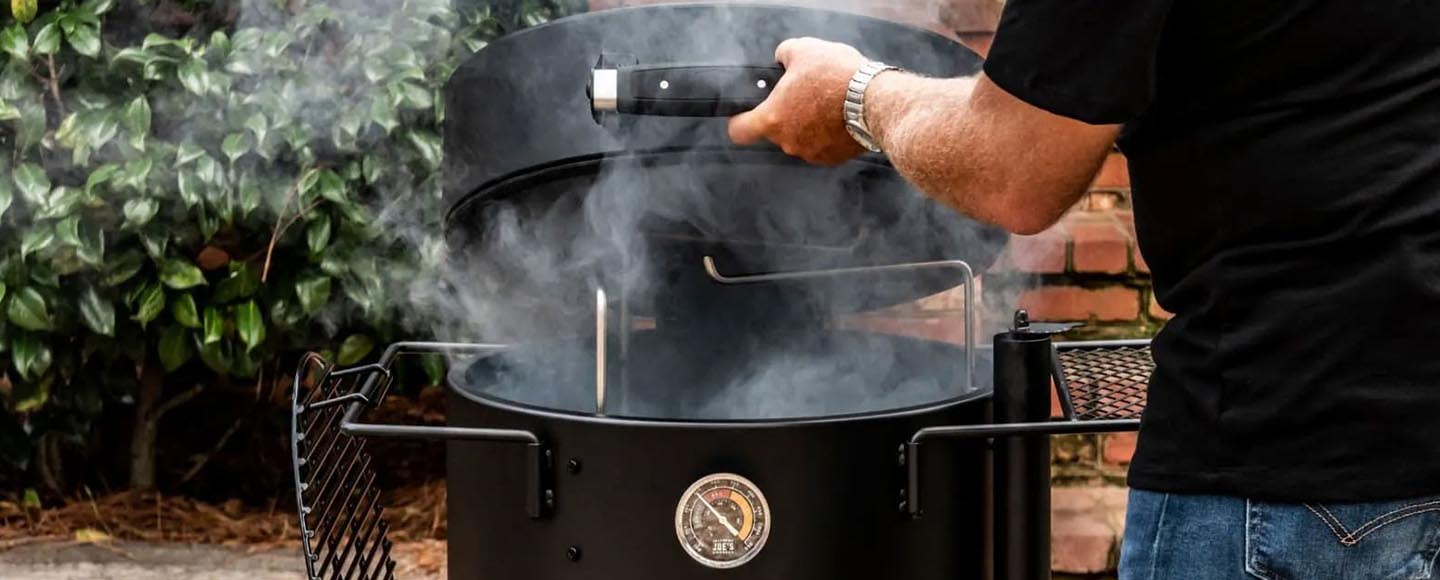
Best Drum Smokers: Reviews & Buying Guide
I still remember the first time a buddy of mine pulled brisket off a beat-up 55-gallon drum he’d built in his garage. No fancy digital controller, no Wi-Fi app, just a drum, some charcoal, and a guy who knew how to read smoke. That brisket had a bark on it I hadn’t seen off my offset smoker, and it took him half the fuel to get there.
That’s the thing about drum smokers. They look like nothing — an ugly steel barrel with some holes drilled in it — but they cook like something special. Ask anyone who’s spent a season on the competition BBQ circuit and there’s a good chance a drum (or three) is sitting in their trailer.
I’ve spent the better part of ten years cooking on offsets, pellet rigs, kamados, and yes, drums — both the store-bought kind and the ones I welded together myself out of stubbornness and a YouTube tutorial. This guide is everything I’ve learned about what makes a good drum smoker, which ones are actually worth your money in 2026, and how to get the most out of one once you’ve got it fired up in the backyard.
In This Guide
- Quick Picks: Best Drum Smokers
- Comparison Table
- What Is a Drum Smoker & How Does It Work?
- Why Buy a Drum Smoker?
- Complete Buying Guide
- Best Drum Smokers Reviewed
- Drum Smoker vs. Other Smokers
- Tips for Getting the Best Results
- Master Class: Setting Up for Brisket
- Are Drum Smokers Good for Competition?
- Is a Drum Smoker Kit Worth Buying?
- Maintenance and Cleaning
- Frequently Asked Questions
- Final Verdict
In this guide, you’ll get:
- A full spec comparison of the 9 best drum smokers on the market right now
- Honest, hands-on style reviews — pros, cons, and who each one is actually built for
- A complete buying guide so you know what actually matters (and what’s just marketing)
- Real cooking advice for brisket, competition setups, and everyday backyard smoking
- Answers to the questions I get asked most about drum smokers
Let’s get into it.
Quick Picks: Best Drum Smokers
Gateway Drum Smokers 55-Gallon
The gold standard in modern drum cooking. Heavy-duty steel workhorse with a removable fire basket and precise dial-pipe intake control. Handles low-and-slow overnight cooks and high-heat grilling effortlessly.
Pit Barrel Cooker Co. 22.5″ Classic
Eliminates the learning curve. Meat hangs from steel hooks over the coals with self-regulating airflow. Genuinely hard to mess up and comes with everything you need out of the box.
Oklahoma Joe’s Bronco
Punches well above its price point. Features a hinged lid, heavy-gauge steel body, adjustable intake tower, and an integrated ash pan that makes cleanup dramatically simpler.
Quick Comparison: Best Drum Smokers at a Glance
| Smoker | Best For | Cooking Capacity | Fuel Type | Weight | Temp Range | Air Vents | Price Range |
|---|---|---|---|---|---|---|---|
| Gateway Drum Smokers 55-Gallon | Best Overall | ~314 sq. in. per grate (3 grates) | Charcoal/Wood | ~140 lbs | 200–500°F | Dial-controlled intake pipes | $$$ |
| Pit Barrel Cooker Co. 22.5″ Classic | Best for Beginners | 8 hooks + 2 grates | Charcoal | ~55 lbs | ~275–325°F (self-regulating) | Fixed, elevation-based | $$ |
| Oklahoma Joe’s Bronco | Best for the Money | 3 tiers, ~700 sq. in. total | Charcoal | ~95 lbs | 200–350°F | Adjustable intake tower | $$ |
| Hunsaker Vortex 55-Gallon | Best for Competition | 3 grates, ~1,000 sq. in. total | Charcoal/Wood | ~150 lbs | 225–450°F | Vortex fire basket + dial vents | $$$$ |
| Pit Barrel Cooker PBX (22.5″) | Best for Brisket | 12+ hooks, extra-tall barrel | Charcoal | ~65 lbs | ~275–325°F | Fixed, elevation-based | $$$ |
| Cotton Gin Smokers “The Meadow” | Best Premium | 3 grates, ~880 sq. in. total | Charcoal/Wood | ~165 lbs | 200–500°F | Machined dial intakes | $$$$$ |
| Big Poppa Smokers DIY Kit | Best Kit | Depends on drum (typically 55-gal) | Charcoal | ~15 lbs (kit only) | 200–400°F+ | Ball valve intake | $$ |
| Pit Barrel Junior (14″) | Best Portable | 4 hooks + mini grate | Charcoal | ~31 lbs | ~275–325°F (self-regulating) | Fixed, elevation-based | $$ |
| Smoker Builders UDS Parts Kit | Best Value DIY | Depends on drum | Charcoal | ~10 lbs (kit only) | 200–400°F+ | Configurable | $ |
Prices shift throughout the year, so treat the $ symbols as relative rather than exact — always check current pricing before you buy.
What Is a Drum Smoker and How Does It Work?
A drum smoker — often called a UDS, short for “Ugly Drum Smoker” — is exactly what it sounds like. Take a steel barrel, drill some intake holes near the bottom, hang a charcoal basket inside, mount a grate (or hooks) up top, and you’ve got a smoker. If you’re browsing types of smokers, this is one of the most raw, effective designs out there.
It’s a stupidly simple design, and that’s exactly why it works so well.
Here’s the basic setup inside most drums:
- A charcoal basket sits low in the barrel, holding your lit coals
- Air enters through adjustable intake holes near the bottom
- Heat and smoke rise straight up through the barrel
- Meat sits on a grate (or hangs from hooks, depending on the model) about two feet above the coals
- A lid on top traps heat and smoke, with a small exhaust vent to let it flow through
That vertical column is the secret. Because the cooking chamber is tall and narrow instead of long and wide like an offset smoker, heat rises evenly around the meat instead of blowing past it in one direction. You don’t get the hot-spot battles you sometimes fight on a cheap offset.
Direct vs. Indirect Cooking in a Drum
Technically, a drum smoker does something in between direct and indirect cooking. The coals are close enough that you get real radiant heat (which is part of why bark forms so well), but the meat isn’t sitting directly over open flame the way it would on a grill. That combination — direct-ish heat with a steady updraft of smoke — is what gives drum-smoked meat that deep mahogany bark people love.
Why the Airflow Design Produces Such Good Barbecue
Field Notes: Because the intake holes are small and near the bottom, and the exhaust is a single small vent on the lid, a drum smoker naturally wants to hold a steady temperature once it’s dialed in. You’re not fighting the fire constantly. Close the intakes down a bit, and the whole barrel settles into a groove and just cooks — for hours, without much fussing.
That’s part of why you’ll find drums parked behind so many competition rigs. When you’ve got six briskets going at once, the last thing you want is a smoker that needs babysitting.
Why Buy a Drum Smoker?
If you’re on the fence between a drum, a pellet smoker, or a kettle grill, here’s honestly why I keep drums in my rotation.
- Outstanding smoke flavor. The vertical design and tight airflow give you a cleaner, deeper smoke ring and bark than most set-and-forget cookers. It’s closer to offset-quality smoke without the constant fire management.
- Excellent fuel efficiency. A drum smoker sips charcoal compared to an offset. I’ve run 12+ hour overnight cooks on a single load using the Minion Method (more on that below), which saves you real money over a season of cooking. Using the best lump charcoal maximizes this efficiency.
- Simple, forgiving temperature control. Once you understand your intake vents, a drum practically runs itself. There’s a real learning curve with offsets — drums are far more forgiving for someone still getting their fire management chops down.
- Affordable compared to ceramic smokers. A quality drum smoker typically costs less than a comparable kamado grill, while offering similar heat retention and fuel efficiency.
- Great for long overnight cooks. Stable temps mean you can load it up before bed and actually sleep instead of checking a thermometer app every 40 minutes.
- High heat capability for grilling. Pull the water pan (if you’re using one) and open the vents, and a lot of drums will climb well past 500°F — plenty hot for searing steaks or grilling chicken, which isn’t something you can say about every dedicated smoker.
How to Choose the Best Drum Smoker: A Complete Buying Guide
Whether this is your first smoker or your fourth, the same handful of things separate a drum you’ll love from one you’ll be fighting with every weekend.
Cooking Capacity
Think about what you actually cook. If it’s mostly weekend burgers and the occasional rack of ribs, a compact drum is plenty. If you’re regularly smoking multiple full packer briskets or feeding a crowd, you’ll want a 55-gallon drum with multiple grates — or a hanging-hook design that lets you fit more meat vertically in the same footprint.
Air Intake & Exhaust Design
This is the heart of how a drum performs. Dial-adjustable intake pipes (like you’ll see on higher-end models) give you far more precise control than a basic slide vent. If you’re a beginner, look for models with marked or pre-set intake positions — it takes a lot of the guesswork out of finding your sweet spot. More experienced cooks will appreciate fully adjustable ball valves or dial intakes that let you fine-tune airflow to the degree. Brushing up on how to use charcoal grill vents is a smart move before diving in.
Steel Thickness
Related to build quality but worth calling out on its own: thicker steel (look for 14-gauge or heavier on premium models) holds heat more evenly and resists warping. It costs more upfront, but it’s the difference between a smoker that lasts 15 years and one that’s rusting through in three.
Temperature Control
Some drums, like the hook-and-hang style cookers, are almost entirely self-regulating once you get your charcoal basket loaded correctly — great for beginners. Others give you full dial control for precision, which competition cooks tend to prefer because they’re chasing very specific bark and doneness targets.
Expandability
Can you add extra grates? A second charcoal basket for higher heat cooks? Some drum smokers are built as a platform you can upgrade over time, which is worth considering if you think you’ll get serious about this hobby.
Portability
A 150-pound drum isn’t going anywhere near a tailgate. If you want to bring your smoker camping or to game day, look at the smaller-diameter portable models built specifically for that.
Warranty & Brand Reputation
Drum smokers see a lot of heat cycling, so a solid warranty on the barrel and hardware tells you the manufacturer trusts their own welds. Established brands with an active competition presence are usually a safe bet — they’ve had their gear tested under real pressure.
Best Drum Smokers Reviewed
I picked these nine specifically to cover the real range of what people are shopping for — true UDS builds, hook-and-hang cookers, DIY kits, and everything in between. Every one of these has a solid reputation among people who actually cook on drums regularly, not just marketing copy.
Best Overall Drum Smoker: Gateway Drum Smokers 55-Gallon Matte Smoker
Overview: If there’s a “gold standard” in modern drum cooking, this is it. Gateway built its reputation on the competition circuit, and this 55-gallon drum is a heavy-duty steel workhorse with a removable fire basket and precise dial-pipe intake control.
Key Specs:
- 55-gallon drum, three cooking grates
- Removable charcoal basket for easy cleanup
- Dial-controlled intake pipes for fine temperature adjustment
- Powder-coated steel construction
Pros
- Handles everything from low-and-slow overnight cooks to high-heat grilling
- Removable basket makes ash cleanup dramatically easier than most drums
- Dial pipes give you genuinely precise airflow control, not just “open or closed”
Cons
- Heavier and pricier than entry-level drums
- Overkill if you’re only cooking for two or three people at a time
Best for: Cooks who want one smoker that can do it all — everyday backyard sessions, big family gatherings, and serious low-and-slow cooks — without upgrading later.
Bottom line: This is the drum I’d point most people toward if budget isn’t the deciding factor. It sets the benchmark other manufacturers are chasing for a reason.
Best Drum Smoker for Beginners: Pit Barrel Cooker Co. 22.5″ Classic
Overview: This one basically eliminates the learning curve. Instead of a traditional grate, meat hangs from steel hooks over the coals, and the airflow is largely self-regulating based on how you load your basket and set your intake holes.
Key Specs:
- 22.5-inch diameter barrel
- 8 hanging hooks plus 2 optional grates
- Fixed intake design, elevation-based airflow
- Ships with hooks, hanging rods, and charcoal basket included
Pros
- Genuinely hard to mess up — it settles into the same temperature range almost every time
- The hang-cooking method self-bastes meat as fat drips through
- Comes with everything you need out of the box
Cons
- Less precise temperature control than dial-vent drums
- Hanging method takes a little getting used to if you’ve only ever cooked on a grate
Best for: First-time smoker owners who want consistently good results without a steep learning curve, and don’t want to spend their first few cooks troubleshooting fire management.
Bottom line: I’ve recommended this to more first-time smoker buyers than any other single product, and I’ve never had one come back disappointed. It’s forgiving in exactly the ways a beginner needs it to be.
Best Drum Smoker for the Money: Oklahoma Joe’s Bronco Drum Smoker
Overview: The Bronco punches well above its price point. Unlike bare-bones drums, it comes with a hinged lid, a heavy-gauge steel body, a proper intake tower, and — my favorite feature — an integrated ash pan that makes cleanup dramatically simpler.
Key Specs:
- Three-tier cooking system, roughly 700 sq. in. of total grate space
- Hinged lid for easy access
- Adjustable intake tower
- Built-in ash pan
Pros
- Strong build quality for the price
- Ash pan alone saves you a genuinely annoying chore
- Enough cooking space for a full weekend cookout
Cons
- Not quite as precise on temperature control as premium dial-vent models
- Some assembly required out of the box
Best for: Backyard cooks who want a real, well-built drum smoker without paying competition-grade prices.
Bottom line: If you’re comparing this to bare-bones drums in a similar price range, there’s honestly no contest — the little quality-of-life touches here make a real difference over a season of cooking.
Best Drum Smoker for Competition: Hunsaker Vortex 55-Gallon Drum Smoker
Overview: This is the drum you’ll see parked in a lot of competition trailers, and the patented Vortex fire basket is the reason why. It spins rising heat around the basket instead of letting it funnel straight up in one column, which kills hot spots that can wreck a contest-worthy bark.
Key Specs:
- 55-gallon drum, three grates, roughly 1,000 sq. in. of total space
- Patented Vortex fire basket design
- Dial-controlled intake vents
- Heavy-gauge steel construction
Pros
- Noticeably more even heat distribution than a standard fire basket
- Large capacity for cooking multiple full racks or briskets at once
- Consistent results turn after turn, which matters a lot in competition
Cons
- Premium price reflects the specialized fire basket engineering
- Large footprint isn’t ideal for smaller patios
Best for: Serious backyard competitors or anyone chasing the most even bark and heat distribution they can get out of a drum.
Bottom line: The Vortex basket is a genuinely clever piece of engineering, not just a marketing gimmick. If contest-level consistency matters to you, this is worth the investment.
Best Drum Smoker for Brisket: Pit Barrel Cooker PBX (22.5-Inch)
Overview: The PBX takes the same hang-cooking concept as the Classic and scales it up specifically for big cuts of meat. The extra-tall barrel and additional hooks mean you can hang multiple full packer briskets at once, vertically, without them touching.
Key Specs:
- 22.5-inch diameter, extra-tall barrel
- 12+ hanging hooks
- Fixed, elevation-based airflow
- Includes hooks, rods, and basket
Pros
- Massive vertical capacity for a barrel this size
- Hanging brisket lets the fat cap drip straight onto the coals for a unique, deep flavor
- Same forgiving temperature control as the Classic model
Cons
- Hanging a full packer takes a bit of practice to balance properly
- Not ideal if you strongly prefer traditional grate cooking
Best for: Anyone who regularly cooks brisket for a crowd and wants maximum capacity without buying a second smoker.
Bottom line: If you’ve read up on how to smoke a brisket and want a setup built specifically for it, this is one of the most purpose-built options on the market.
Best Premium Drum Smoker: Cotton Gin Smokers “The Meadow” 55-Gallon
Overview: This is the artisan option — the kind of drum you buy when you want something that performs beautifully and looks like it belongs in a showroom. Custom paint finishes, 14-gauge American steel, and machined intake dials put this well above standard production drums.
Key Specs:
- 55-gallon drum, three grates, roughly 880 sq. in. of cooking space
- 14-gauge heavy steel construction
- Custom paint coating options
- Machined dial intake controls, optional visual temperature gauge
Pros
- Exceptional build quality and finish
- Heavier steel means outstanding heat retention and longevity
- Precise, tactile controls that feel built to last decades
Cons
- Significant price premium over standard drums
- Overkill for casual weekend cooks
Best for: Pitmasters who see their smoker as a long-term investment and want top-tier materials and craftsmanship to match top-tier cooking.
Bottom line: This is a “buy it once” smoker. If you’ve got the budget and want something that’ll outlast several cheaper drums combined, it’s hard to beat.
Best Drum Smoker Kit: Big Poppa Smokers DIY Engineered Drum Smoker Kit
Overview: For the DIY crowd who wants a real UDS build without engineering every piece from scratch, this kit gives you every component you need — vents, handles, lid hooks, and the internal nest — so you just supply a clean, unlined 55-gallon steel drum and do the drilling.
Key Specs:
- Complete hardware kit: vents, handles, lid hooks, charcoal nest
- Ball-valve style intake control
- Requires a separately sourced 55-gallon drum
- Basic tools required for assembly (drill, wrench)
Pros
- Significant cost savings over a pre-built drum
- High-quality hardware components, comparable to premium production models
- Satisfying weekend project if you enjoy building your own gear
Cons
- You’ll need to source your own drum and do the actual build
- Requires basic tools and a free afternoon (or two)
Best for: Hands-on cooks who want premium-quality components and don’t mind a little assembly to save money.
Bottom line: This is the kit I’d point a confident DIYer toward. The hardware quality genuinely rivals what you’d get on a pre-built drum costing two or three times as much.
Best Portable Drum Smoker: Pit Barrel Cooker Co. 14″ Pit Barrel Junior
Overview: A scaled-down version of the Classic that weighs just over 30 pounds but delivers the same vertical hanging performance in a footprint that actually fits in a trunk.
Key Specs:
- 14-inch diameter barrel
- 4 hanging hooks plus mini grate
- Fixed, elevation-based airflow
- Roughly 31 lbs total weight
Pros
- Genuinely portable — fits in a sedan trunk without a fight
- Same forgiving, self-regulating airflow as its bigger siblings
- Great for tailgating, camping, or small backyard spaces
Cons
- Limited cooking capacity for larger gatherings
- Not built for feeding a big crowd at once
Best for: Tailgaters, campers, and anyone with limited patio space who still wants real drum-smoked flavor.
Bottom line: This is proof you don’t need a 55-gallon drum to get great results. For solo cooks or small groups on the move, it’s an easy recommendation.
Best Value DIY-Friendly Drum Smoker: Smoker Builders UDS Parts Kit
Overview: An affordable hardware package built for cooks who want full creative control over their build rather than a fixed kit layout. You choose your own slide vents, exhaust configuration, and drum source.
Key Specs:
- Core UDS hardware: intake vents, exhaust cap, lid gasket, grate hangers
- Configurable vent and exhaust options
- Requires separately sourced drum
- Entry-level pricing among kits
Pros
- Most affordable path to a genuine UDS build
- Flexibility to customize vent placement and style to your preference
- Great learning project for understanding how drum airflow actually works
Cons
- Requires more planning and know-how than a fully engineered kit
- Fewer included accessories than premium kit options
Best for: Budget-conscious DIYers who want to fully customize their build and don’t mind doing some extra homework.
Bottom line: If cost is your main constraint and you’re willing to put in a little extra planning, this gets you into drum smoking for less than almost anything else on this list.
Drum Smoker vs. Other Smokers
Drum Smoker vs. Offset Smoker
Offsets give you incredible flavor control and that classic pitmaster experience, but they demand near-constant fire management — you’re feeding logs and chasing temperature swings for hours. A drum holds steady with far less fuss and uses noticeably less fuel to get there. If you love the ritual of tending a fire, go offset. If you want great results with less babysitting, go drum. Curious how offsets actually run day to day? Check out our guide on how to use an offset smoker.
Drum Smoker vs. Pellet Smoker
A pellet smoker wins on pure convenience — set your temperature and walk away. But drums typically deliver deeper, more traditional smoke flavor and better bark because you’re cooking over real charcoal and wood instead of an auger-fed pellet fire. If convenience is your top priority, pellet wins. If flavor and that “real barbecue” character matter more, a drum is hard to beat.
Drum Smoker vs. Kamado Grill
Kamados are incredibly versatile — you can smoke, grill, bake, and sear all on the same cooker — and they hold heat exceptionally well thanks to thick ceramic walls. But that versatility comes at a real cost premium, and kamados are heavy and fragile compared to steel drums. Drums are cheaper, tougher, and honestly better suited to serious low-and-slow cooking at scale. See our rundown of the best kamado grills to compare specs.
Drum Smoker vs. Vertical Charcoal Smoker
These two are close cousins, and the differences come down to airflow design. Traditional vertical charcoal smokers (like a bullet-style cooker) use a water pan between the fire and the meat, which adds moisture but also adds another variable to manage. Drums often skip the water pan entirely, relying on the tall, narrow chamber and tight airflow control to hold steady heat. Both are excellent — it often comes down to personal preference for the exact bark and moisture profile you’re after.
Tips for Getting the Best Results From a Drum Smoker
A few things I wish someone had told me before my first cook on a drum:
- Use quality lump charcoal or briquettes. Cheap charcoal burns inconsistently and leaves more ash, which can choke your airflow. Check out our breakdown of briquettes vs. lump charcoal if you’re not sure which to grab.
- Arrange charcoal using the Minion Method. Fill your basket with unlit charcoal, then pour a small amount of fully lit coals on top. The fire spreads slowly and gives you hours of steady heat instead of one big burst.
- Add wood chunks instead of chips. Chips burn off too fast in a drum’s high-airflow environment. Chunks give you sustained smoke throughout a long cook. Our guide to the best wood for smoking is a good place to start if you’re picking flavors.
- Control airflow instead of constantly adjusting fuel. Resist the urge to keep adding charcoal to fix a temperature dip. Small vent adjustments almost always solve the problem faster.
- Monitor grate temperature, not just ambient. A separate probe near your meat gives you a much more accurate read than trusting a lid thermometer alone.
- Let the smoker stabilize before adding meat. Give it 15–20 minutes after lighting to settle into your target range before you put food on. Adding meat too early usually leads to temperature swings you’ll be chasing all cook.
- Keep the lid closed. Every time you open it, you lose heat and smoke, and it can take 10–15 minutes to recover. Trust your thermometer instead of your curiosity.
Master Class: Setting Up Your Drum Smoker for Brisket
Brisket on a drum is one of my favorite cooks, but it rewards a little extra planning. Looking for some inspiration? Check out our favorite smoker recipes to pair with your cookout.
Fire management. Load a full basket using the Minion Method for a cook this long — you’re likely looking at 8-14 hours depending on size. A drum’s efficiency means you probably won’t need to refuel, but keep a small amount of extra charcoal on standby just in case.
Water pan (if applicable). Not every drum uses one, but if yours does, a partially filled water pan can help buffer temperature swings and add a touch of moisture to the cooking environment. On hanging-style cookers without a pan, the fat rendering straight onto the coals does some of that work for you.
Fat cap placement. On a grate-style drum, fat cap up is a solid default — it helps baste the meat as it renders. On a hook-and-hang cooker, the fat naturally faces outward and drips down toward the fire as it cooks.
Maintaining steady temperatures. Aim for 250–275°F and resist the urge to peek constantly. A drum wants to hold steady — let it.
Wrapping strategy. Most cooks wrap once the bark is set and the internal temp stalls, usually somewhere in the 165°F range. Butcher paper is popular because it holds bark better than foil while still helping push through the stall. If you’re new to this step, our guide on when to wrap brisket walks through the timing in detail.
Resting the brisket. This step gets skipped more than any other, and it shouldn’t. Rest for at least an hour, wrapped and in a cooler if you can, before slicing. It makes a genuinely noticeable difference in juiciness.
If you want a deeper dive into technique, I’d also point you toward our Aaron Franklin-style brisket recipe and our guide on how to trim a brisket before your next cook.
Are Drum Smokers Good for Competition BBQ?
Absolutely — and if you’ve spent any time walking through a competition site, you’ve probably seen more drums than you’d expect.
- Consistent temperatures. Once dialed in, a drum holds heat remarkably well, which matters enormously when you’ve got multiple turn-ins to hit at precise times.
- Excellent bark formation. The combination of radiant heat and steady airflow produces some of the best bark you’ll get outside of a stick-burning offset.
- Efficient fuel usage. Competition teams are often running multiple cookers at once — fuel efficiency isn’t a nice-to-have, it’s a real logistical consideration over a long weekend.
- Common competition modifications. Serious teams often add upgraded fire baskets (like the Vortex-style design we covered above), digital temperature controllers, and additional grates for capacity.
- Why many championship teams still cook on drums. At the end of the day, drums produce results that stand up against much more expensive rigs, and their simplicity means less that can go wrong mid-competition. When your reputation is on the line, “boring and reliable” is a feature, not a limitation.
Is a Drum Smoker Kit Worth Buying?
DIY vs. pre-built smokers. A kit gets you most of the way to a premium drum smoker experience for a fraction of the price — but it does require some sweat equity.
What’s included. Most quality kits give you the vents, handles, lid hooks, and charcoal basket or nest. You typically supply your own clean, unlined 55-gallon steel drum.
Cost savings. Depending on the kit, you can often build a drum smoker for less than half what a comparable pre-built model would cost.
Required tools. At minimum, expect to need a drill, a wrench set, and possibly a jigsaw depending on your kit’s design. Nothing exotic, but not a zero-tool project either.
Who should build their own. If you enjoy hands-on projects, want to save money, or just like understanding exactly how your gear works, a kit is a genuinely satisfying way to get into drum smoking. If you’d rather skip straight to cooking, a pre-built option like the Bronco or the Pit Barrel Classic will get you there faster.
Maintenance and Cleaning
Drum smokers are low-maintenance by design, but a few habits will keep yours running well for years.
- Ash removal. Clear ash from the basket after every cook (or every few, depending on volume). Built-up ash chokes airflow and makes temperature control harder over time.
- Cleaning grates. A stiff grill brush after each cook keeps buildup manageable. A deeper scrub every few months prevents stubborn carbon buildup.
- Preventing rust. Keep your drum covered when not in use, and if you’re in a humid climate, consider a light coat of high-heat oil on interior surfaces during the off-season. Check out our Masterbuilt smoker cover review if you’re shopping for protection.
- Re-seasoning. If rust does show up, a light re-seasoning (same idea as seasoning a cast iron pan) will get your drum back in fighting shape.
- Storage tips. Store in a dry, covered area if possible. Even a basic tarp makes a meaningful difference in longevity if you don’t have garage space.
Frequently Asked Questions
What is the best drum smoker on the market?
For most people, the Gateway Drum Smokers 55-Gallon Matte Smoker is the best all-around option thanks to its build quality, removable fire basket, and precise dial-vent control. If you’re brand new to smoking, the Pit Barrel Cooker Classic is an easier, more forgiving starting point.
Are drum smokers better than offset smokers?
“Better” depends on what you’re after. Drums are more fuel-efficient and far easier to maintain steady temperatures on. Offsets offer a slightly different, more traditional flavor profile but demand much more hands-on fire management.
Can beginners use a drum smoker?
Yes, and honestly, drums are one of the more beginner-friendly smokers out there once you understand the basic airflow principles. Hook-and-hang style cookers in particular are nearly foolproof for first-timers.
What size drum smoker should I buy?
For a typical family, a standard 55-gallon drum with multiple grates gives you plenty of room without being excessive. If you’re cooking solo or for one or two people, a smaller 22-inch drum is usually enough. Feeding large groups regularly? Look at multi-grate 55-gallon models or hanging-style drums with high hook counts.
Are drum smokers good for brisket?
Very good, actually. The combination of steady heat and strong bark formation makes drums a favorite for brisket among a lot of serious home cooks and competitors alike.
How long will a drum smoker burn on one load of charcoal?
Using the Minion Method, most drums will comfortably run 10-14+ hours on a single full basket, depending on the model and outside temperature. That’s part of what makes them so practical for overnight cooks.
Are drum smokers fuel efficient?
Yes — noticeably more so than offset smokers. The tight airflow design means you’re not losing heat and burning extra fuel just to maintain temperature the way you might on a leakier cooker.
Can you grill on a drum smoker?
On many models, yes. Pull any water pan, fully open your intake vents, and a lot of drums will climb into solid grilling territory (450°F+), letting you sear steaks or grill chicken on the same cooker you smoke on.
Final Verdict
If you’ve made it this far, here’s the short version.
- Best Overall: Gateway Drum Smokers 55-Gallon Matte Smoker
- Best Value: Oklahoma Joe’s Bronco Drum Smoker
- Best for Beginners: Pit Barrel Cooker Co. 22.5″ Classic
- Best for Competition Cooks: Hunsaker Vortex 55-Gallon Drum Smoker
- Best Premium Pick: Cotton Gin Smokers “The Meadow” 55-Gallon
Here’s my honest take after years of cooking on all styles of smokers: a drum smoker earns its ugly reputation with genuinely great barbecue. You get offset-quality bark and smoke flavor without the constant fire-tending, at a price point that beats most kamados and premium pellet rigs.
If you’re just getting started, don’t overthink it — grab the Pit Barrel Classic or the Bronco and get cooking. You’ll build confidence fast because these smokers are built to be forgiving. If you already know your way around a fire and want the most precise control money can buy, the Gateway or the Hunsaker Vortex will reward that experience with results that hold up against any cooker on the market.
Whichever one you land on, do yourself a favor and run a couple of low-stakes cooks first — some burgers, a rack of ribs — before you commit a full packer brisket to it. Get to know how your drum holds temperature, and the rest comes easy.
Now go fire it up.
1 Comment